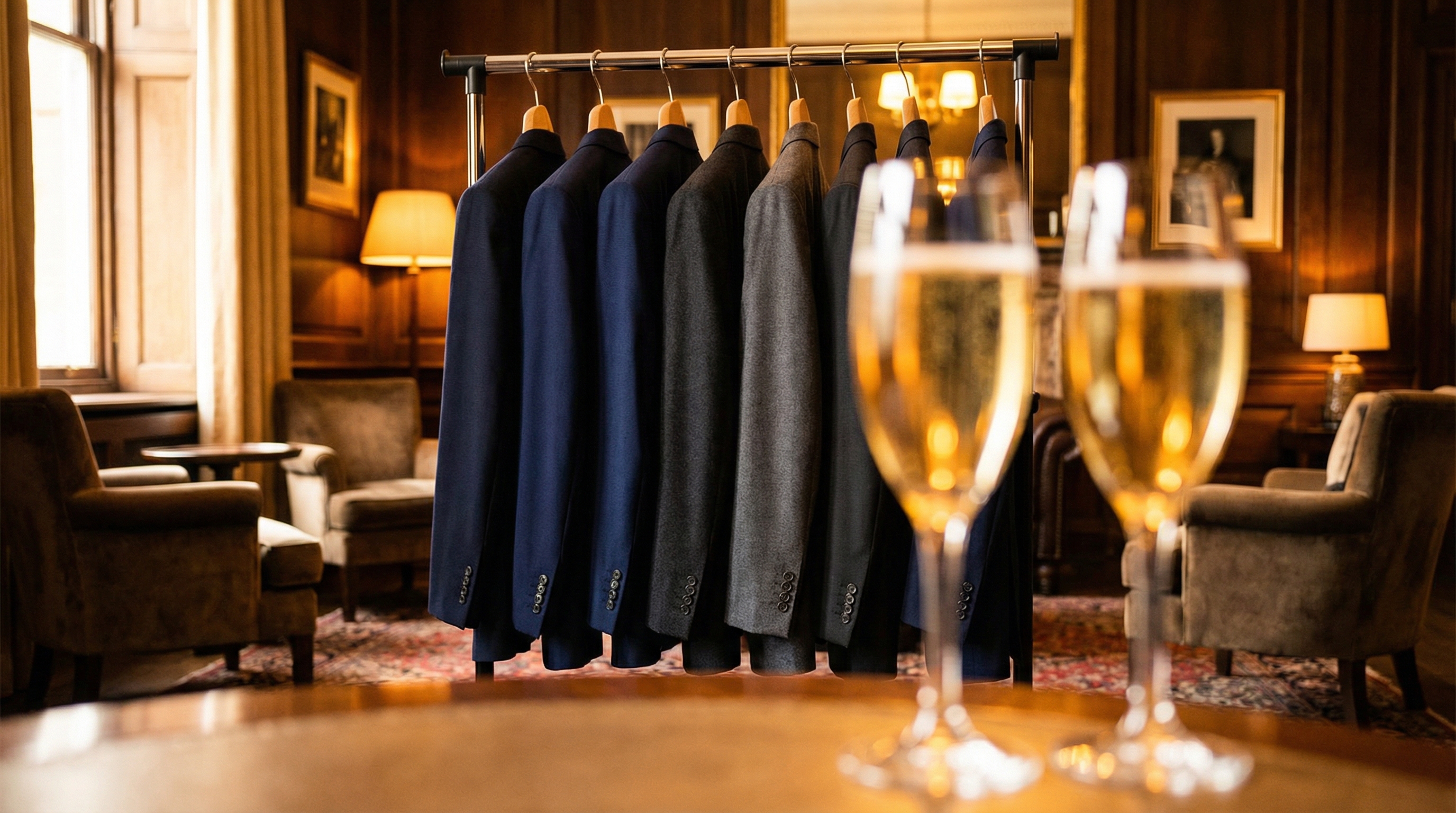
A well-run trunk show can generate a month of revenue in a single weekend. Here is everything you need to know — from planning to follow-up.
A well-run trunk show can generate $30,000–$100,000 in a single weekend. A poorly run one burns through your marketing budget and leaves you with nothing but leftover canapés. The difference comes down to preparation, presentation, and follow-up.
What Makes Trunk Shows Work
A trunk show compresses the buying cycle. You take clients who might deliberate for weeks and give them a reason to decide now: exclusive fabrics, limited-time pricing, and the energy of an event. The psychology is powerful — but only if the execution matches.
Phase 1: Planning (4–6 Weeks Before)
Choose Your Focus
The most successful trunk shows have a clear theme:
- Seasonal collection — "Fall/Winter fabric preview"
- Mill partnership — "Exclusive fabrics from Loro Piana"
- Occasion-based — "Wedding season: suits for grooms and groomsmen"
- Experience-based — "The art of bespoke: watch your suit come to life"
A theme gives your marketing a hook. "Come see fabrics" is forgettable. "Preview next season’s exclusive Italian wools before anyone else" creates desire.
Set Revenue Targets
Work backward from your goal:
$50K
Target revenue
$2,500
Average order value
20
Orders needed
- Consultation-to-order rate: 50%
- Appointments needed: 40
- Invite-to-appointment rate: 10%
- Invitations to send: 400
These numbers tell you exactly how much marketing you need and whether your venue can handle the volume.
Secure Your Venue
- Your own shop — Lowest cost, most authentic, limited capacity
- Hotel suite — Professional, private, great for high-end clients
- Partner venue — Co-host with a luxury brand (watch dealer, car showroom) for shared audience
Avoid Mondays and Fridays. Saturday 10am–6pm is the sweet spot. Consider adding a Thursday evening "preview night" for VIP clients.
Phase 2: Promotion (3–4 Weeks Before)
Invitation Strategy
Layer your outreach:
- Week 4: Personal invitations — Call your top 20 clients. They should feel like insiders, not targets.
- Week 3: Email campaign — Send to your full client list. Include specific fabrics to build anticipation.
- Week 2: Social media — Behind-the-scenes content. Fabric previews. "Getting ready" posts.
- Week 1: Reminder push — Final email + social posts. Include a time-limited incentive.
The Incentive
Give people a reason to attend and buy during the event:
- 10–15% event-only pricing on specific fabrics
- Complimentary upgrade (free monogramming, premium lining)
- Exclusive access to fabrics not available after the event
- Bring a friend: both receive a gift (quality pocket square, tie)
Phase 3: Execution (The Day)
Setup Checklist
- Fabric bolts displayed at standing height (not flat on tables)
- Full-length mirror in consultation area
- Digital display running AI visualization demos
- Refreshments: quality matters more than quantity
- Measurement stations ready with forms pre-printed
- Payment processing tested and working
The Client Flow
- Welcome (2 min) — Greet, offer a drink, brief orientation
- Browse (5–10 min) — Let them touch fabrics, absorb the atmosphere
- Consultation (15–20 min) — Discuss needs, recommend fabrics, show visualizations
- Visualization (5 min) — Capture their photo, show them in their chosen fabric
- Decision (5 min) — Review options, take measurements if proceeding
- Send-off — Email lookbook, confirm timeline, next steps
Total time per client: 30–40 minutes. With two consultation stations, you can see 12–16 clients in a full day.
The Visualization Advantage
Trunk shows without visualization rely on clients imagining the result. With AI visualization, you can show them the finished product in minutes. Clients who see themselves in the suit are far more likely to order during the event rather than going home to "think about it."
Phase 4: Follow-Up (24–72 Hours After)
For Clients Who Ordered
- Same-day confirmation email with order details and timeline
- Include their visualization lookbook as a reminder of what’s coming
- Set expectations for next fitting
For Clients Who Attended But Didn't Order
- Send their personalized lookbook within 24 hours
- "Thank you for joining us" email with event photos
- Extend the event pricing for 48 hours (creates genuine urgency)
- Personal follow-up call on Monday
For No-Shows
- "Sorry we missed you" email with event highlights
- Offer a private consultation to see the same fabrics
Measuring Success
Track these numbers after every trunk show:
- Invitations sent → RSVPs → Attendees → Orders
- Revenue per attendee (target: $1,000+)
- Same-day close rate (target: 40%+)
- Follow-up close rate (target: 20%+ of non-buyers)
- Cost per acquisition (venue + food + marketing ÷ orders)
Common Mistakes
- Overbooking — Too many clients, not enough time per person. Quality over quantity.
- No follow-up plan — Half your revenue comes after the event. Plan for it.
- Generic invitations — Personalized outreach converts 4x better than mass emails.
- Forgetting the atmosphere — Lighting, music, and presentation matter. This is a luxury experience.