

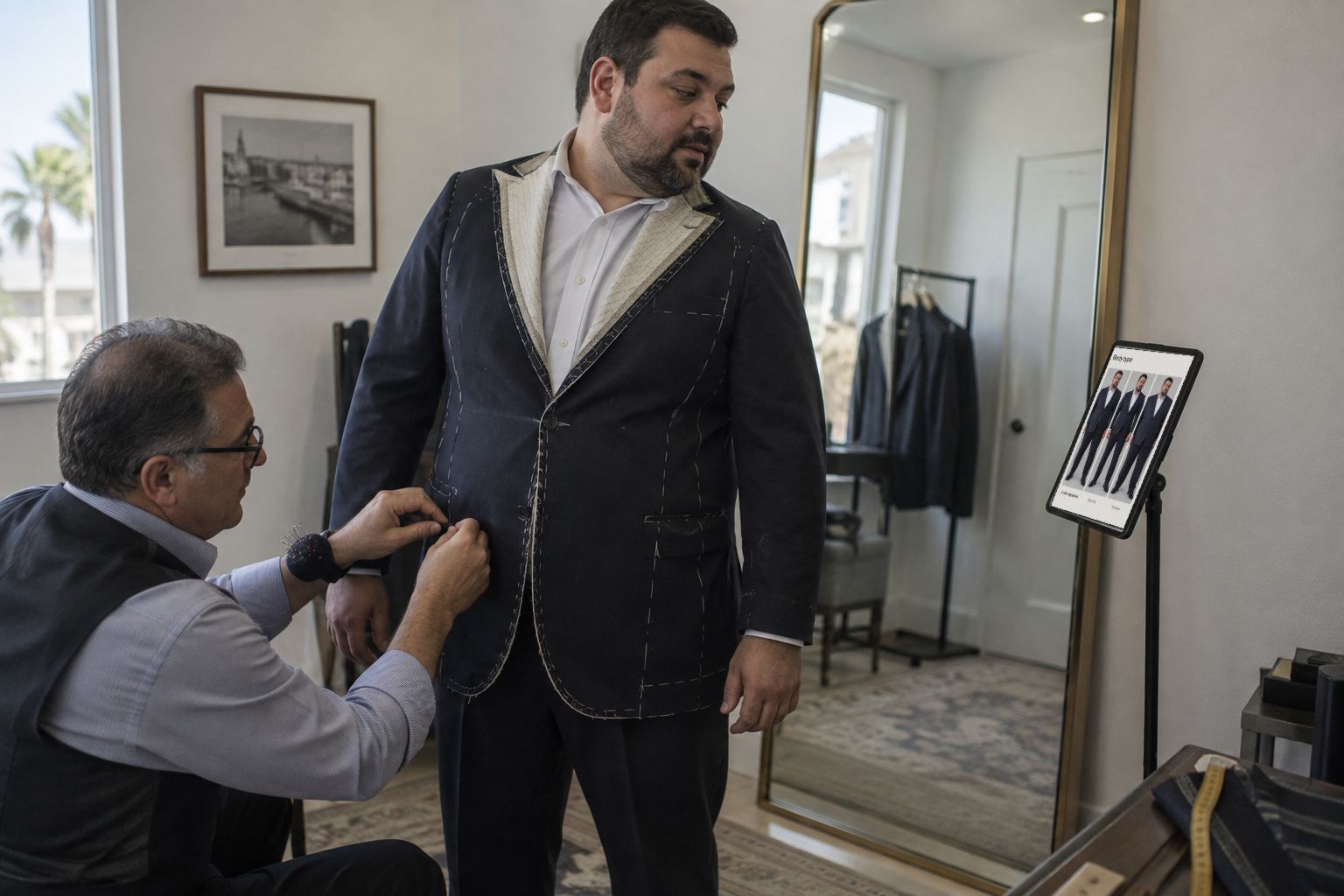
A suit that looks right on a size-38 model tells a size-46 client nothing. How Sartorly reads his build from the photo, and what the Slimmer, Athletic and Stockier options do, with his face left alone.
The oldest problem with fashion pictures is that the man in them isn’t your client. He is 1.88 m, a size 38, and twenty-six. Your client is fifty-eight, broad through the chest, and has had the same waistline for fifteen years. Showing him the model tells him nothing about how the suit will look on him.
Sartorly works from his photo, not the model’s. This is how it handles his build.
The Build Comes From His Photo
Before the first look is drawn, Sartorly reads his build from the photo, the way you size up a client when he walks in: overall build (from slim to very heavy), shoulders, chest, midsection and neck. Never his face.
That reading goes with the order to cut the suit to him: keep the pose and framing of the style, fit the garments to this body, and do not slim him down or bulk him up. It stays with the look, so the refinements, the editor changes and all fourteen poses show the same man.
Slimmer, Athletic, Stockier
The first look is always As photographed. Sometimes you want to show him something else: the suit after the weight he plans to lose before the wedding, or how a structured shoulder changes his line. In the fitting room, open Refine and pick a Body type: Slimmer, Athletic or Stockier.
Each body type is one generation and one credit, and it becomes a new version in the strip. Each step is roughly two suit sizes: enough to see, not a different person. Going back to As photographed brings back the first look for free.
The Face Stays His
Image models like to redraw the face when they change the body: a slimmer body comes back with a narrower, different face. For your client that is the one thing that must not change.
So Sartorly does not trust the model with it. After the new body is drawn, it takes his head from the as-photographed look and puts it back on the new picture, blended in below the chin so the collar and neck stay natural. If it can’t line the head up, the generation fails and the credit is refunded, rather than showing him with a stranger’s face.
When to Use It (and When Not To)
- Weight-loss goals. A groom who is training for the wedding wants to see the suit on the body he is working towards. Show both, and cut for the one he has at the last fitting.
- Cut choices. Athletic shows what a stronger shoulder does to his line. It is a conversation about construction, not a promise about his body.
- Not as a compliment. Don’t slim a client who didn’t ask. The first look, as photographed, is the one that sells, because it is him.
A client trusts the picture when he recognises himself in it. Everything else follows from that.